
Ep. 7 - Building AI Agents Is Easy. Getting Them to Work Together Isn’t.
A practical guide to the four orchestration patterns that turn scattered agents into a reliable enterprise workforce.

It was 3 AM when everything changed.
Sarah, VP of Operations at a global insurer, woke up to a nightmare alert:
“47 claims flagged for fraud. Special Investigation Unit (SIU) overwhelmed. Manual review ETA: 8–10 weeks.”
In insurance, that’s catastrophic. Regulators expect payouts fast. Customers need money now to fix cars, pay hospitals, rebuild homes.
But if Sarah pays on time, millions could go to fraudsters who disappear before investigators confirm anything. If she delays, she’s staring at lawsuits, fines, and furious customers.
Even if only a third of those 47 claims were fake, that’s $1M+ gone and 30+ real customers stuck in limbo.
By sunrise Sarah finally saw the real issue: the bottleneck wasn’t intelligence. It was integration and coordination.
Her fraud detection flagged suspicious patterns but couldn’t pull full claim histories. Her policy system knew coverage limits but couldn’t access investigator notes. Her claims engine processed payouts but had no visibility into fraud scores. Every tool worked in isolation. Her SIU team spent days manually copying data between systems, chasing down the right people, waiting for responses from siloed departments.
What she needed wasn’t another tool. It was orchestration. A way for systems to query each other automatically, for investigations to route to the right specialist without emails, for decisions to flow based on real-time data across boundaries.
At 3 AM, agentic AI stopped sounding like hype and started sounding like survival.
The Problem with Smart Tools That Can’t Talk to Each Other
Here’s what most people miss about AI: building intelligent agents isn’t the hard part anymore. The real challenge is getting them to work together.
This became crystal clear watching Ignite 2025 sessions this week. Particularly the deep dives on Azure AI Foundry and Agentic AI. Microsoft’s making the plumbing easier: connecting agents to data sources, MCP tools, APIs, enterprise systems. But integration alone isn’t enough
I think we’ve largely solved agent design and development. The next frontier? Orchestration between agents will drive real business value.
Not just one agent doing one task, but teams of agents (local and remote) coordinating intelligently toward shared outcomes, efficiently, reliably, at scale.
Think about your own workplace. You have brilliant colleagues, each with specialized expertise. But without coordination, without someone conducting the orchestra, you get chaos. Duplicated work. Missed handoffs. Conflicting decisions.
AI agents face the same challenge. And that’s where orchestration patterns come in.
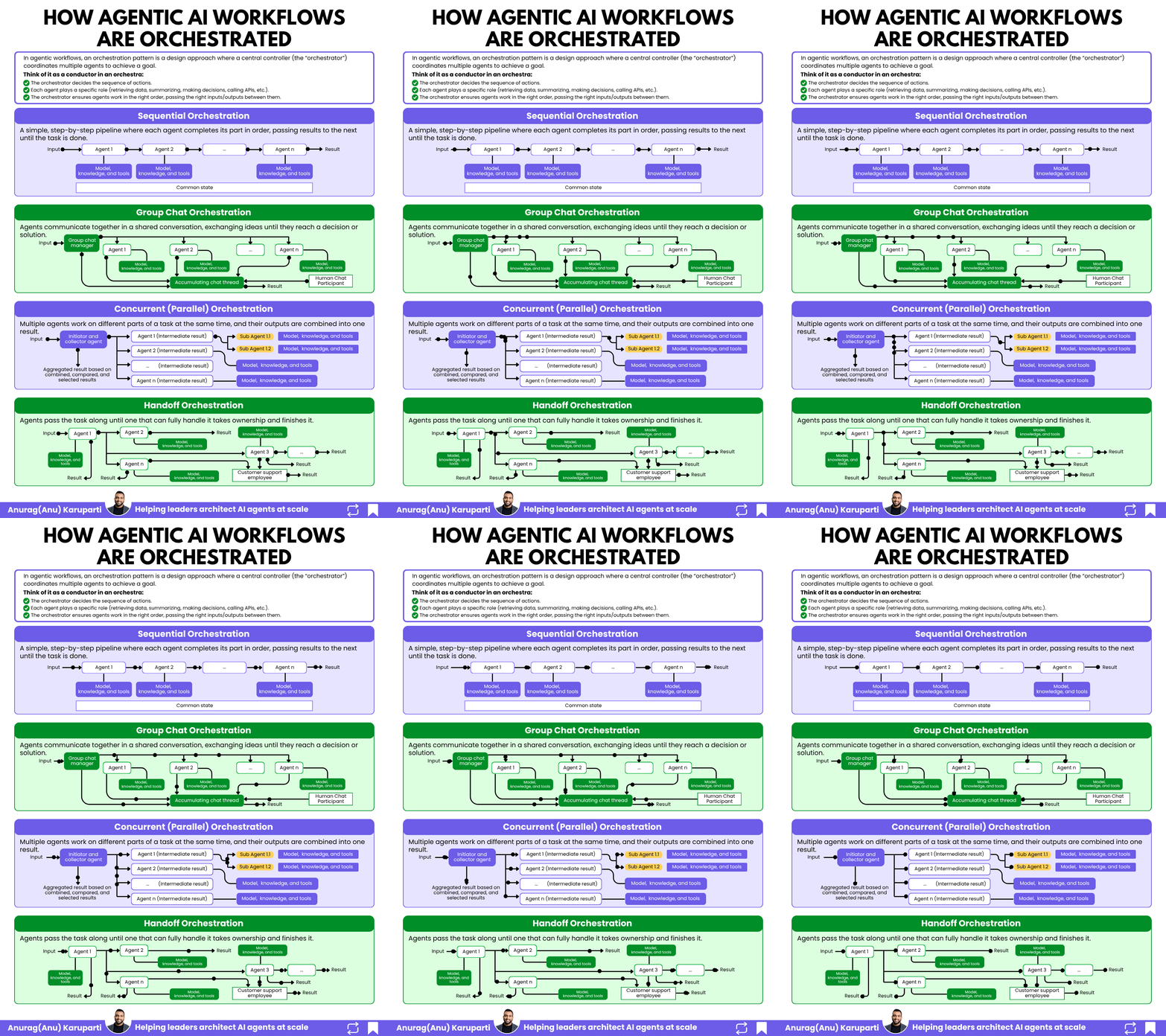
Pattern 1: Sequential Orchestration—The Assembly Line
The Scenario: Sarah’s fraud investigation workflow
When those 47 suspicious claims hit the system, here’s what happened:
Agent 1 (The Retriever) pulled complete claim histories, including past submissions, payment patterns, and medical records
Agent 2 (The Analyzer) examined each claim against known fraud indicators. Billing codes that don’t match procedures, impossible timelines, duplicate submissions
Agent 3 (The Cross-Referencer) compared findings against external databases. Provider registrations, pharmacy records, court judgments
Agent 4 (The Summarizer) compiled evidence packages ranked by fraud likelihood
Each agent completed its specialized task before passing the baton. No agent jumped ahead. No confusion about who owned what.
The result? By 7 AM, Sarah had 47 complete investigation reports. Twelve flagged for immediate action, thirty-two cleared, three escalated to human investigators for edge cases.
When to use Sequential Orchestration:
Clear, linear workflows with defined stages
Each step depends on the previous one completing
Quality control is easier when you can inspect work at each handoff
You need predictable, auditable processes (think compliance, finance, healthcare)
The trade-off: It’s not the fastest pattern but a more reliable one. You trade time for accuracy. But for regulated industries where you need to show your work, sequential orchestration is gold.
Pattern 2: Group Chat Orchestration—The War Room
The Scenario: Black Friday website crash
It’s 2 AM on Black Friday. Sarah’s e-commerce platform just went down with 50,000 customers in checkout queues and $2 million in pending orders.
This isn’t a problem you can solve step-by-step. You need simultaneous expertise from multiple angles:
Technical Agent assessing server capacity, database bottlenecks, CDN failures
Customer Experience Agent tracking social media sentiment, drafting apology messaging
Inventory Agent identifying which products customers were buying, what can still be fulfilled
Financial Agent calculating revenue loss scenarios, approval limits for emergency cloud capacity
Marketing Agent designing recovery campaigns and loyalty offers
These agents didn’t work in sequence. They worked like a crisis response team in real-time. Technical Agent identifies maxed-out database connections. Inventory Agent immediately notes 80% of abandoned carts contain the same three hot products. Marketing Agent suggests “We saved your cart” emails with priority checkout. Financial Agent calculates that emergency server capacity costs less than abandoned revenue. Customer Experience Agent drafts three-tier messaging for affected customers.
After 89 exchanges over 45 minutes, work that would’ve taken multiple emergency meetings, the agents reached consensus: emergency infrastructure scale-up, targeted cart recovery campaign, tiered customer service response.
Human executives reviewed, approved, and the site was back online with a coordinated recovery strategy in under an hour.
When to use Group Chat:
Complex decisions requiring multiple perspectives
No clear “right sequence” for tackling the problem
Best solution emerges from debate and refinement
You need agents to challenge each other’s assumptions
The trade-off: Harder to control, more expensive (lots of LLM calls), but produces nuanced decisions rigid workflows can’t match.
Pattern 3: Concurrent (Parallel) Orchestration—The Research Team
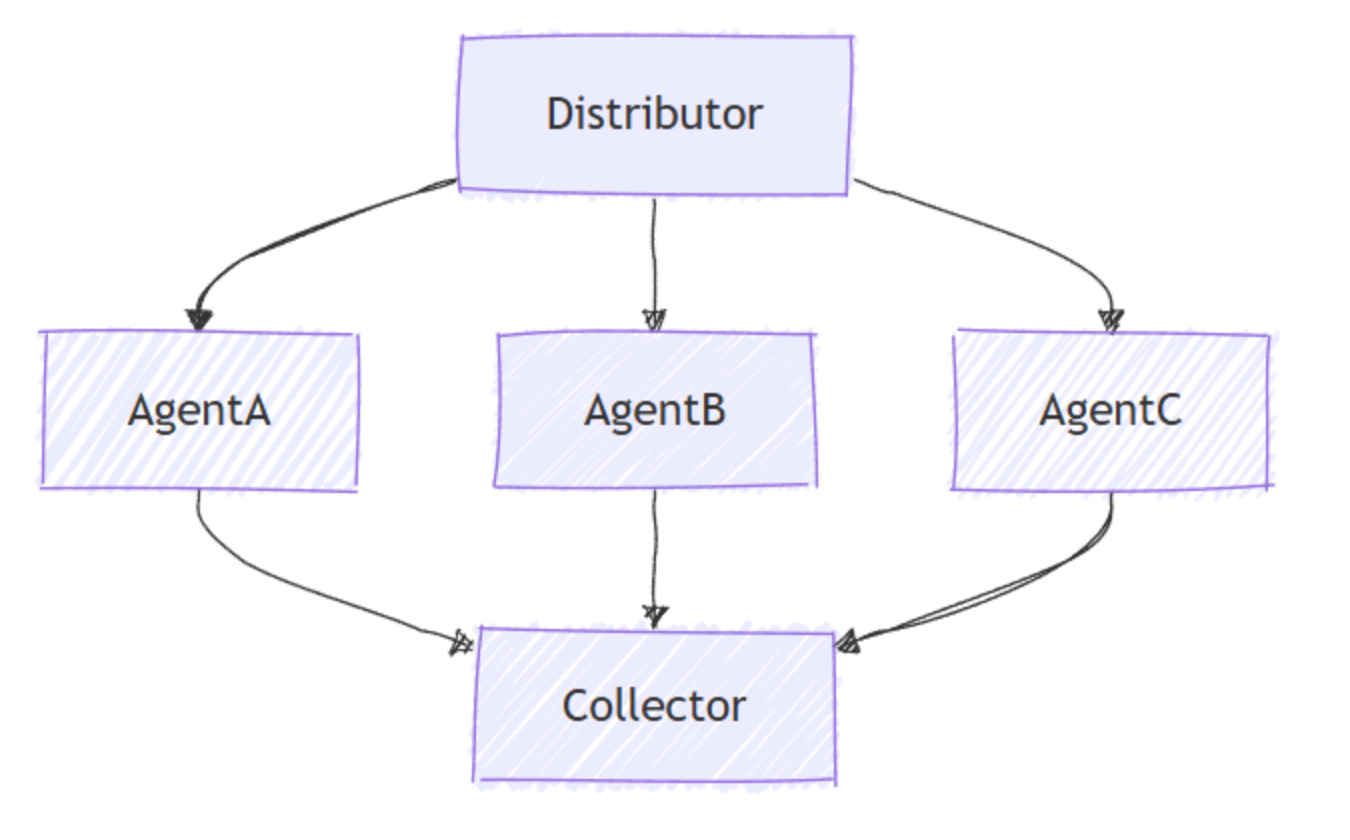
The Scenario: Market expansion analysis
Sarah’s company was considering entering three new geographic markets. The CEO wanted a comprehensive analysis in one week. Normally a three-month project.
The solution? Deploy specialized agents in parallel:
Market Research Agent analyzed demographic data for all three regions simultaneously
Competitive Intelligence Agent profiled existing players across all markets
Regulatory Agent mapped compliance requirements in each territory
Financial Modeling Agent built revenue projections for various scenarios
Cultural Analysis Agent assessed go-to-market adaptation needs
All five agents worked simultaneously, each producing intermediate results. An Aggregator Agent then compared findings, identified conflicts (the Financial Agent was bullish on Market A while the Regulatory Agent flagged major compliance hurdles), and synthesized a ranked recommendation.
When to use Concurrent Orchestration:
Time is critical
Subtasks are truly independent (no agent needs another’s output to proceed)
You want diverse perspectives on the same problem
You can afford the parallel processing costs
The trade-off: Requires more computational resources upfront, but dramatically compresses timeline.
The term “concurrent/parallel orchestration” is used for two related but distinct patterns:
Ensemble/Consensus Pattern: Same task → multiple agents → compare/vote/combine answers
Divide-and-Conquer Pattern: One task → split into subtasks → different agents → aggregate results
Pattern 4: Handoff Orchestration—The Specialist Network
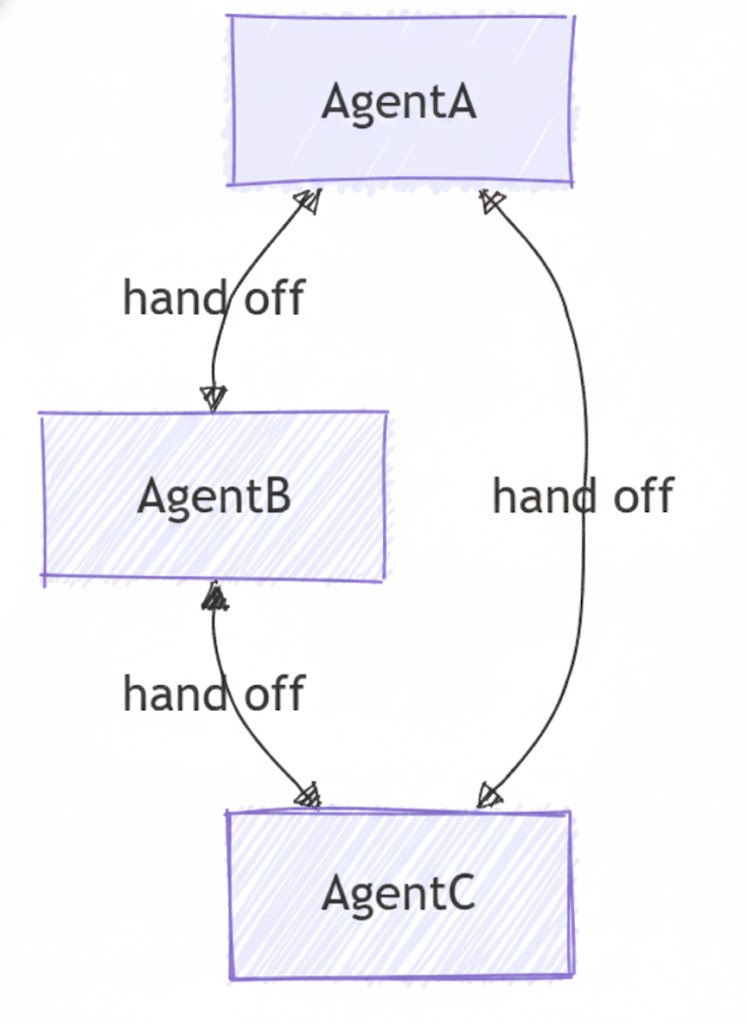
The Scenario: Complex contract negotiation
Here’s where things get really interesting. A major client wanted to renegotiate their multi-million dollar contract. This wasn’t a job for a fixed pipeline or even parallel processing. It needed dynamic routing based on what the situation required at each moment.
The workflow worked like this:
Agent 1 (Intake Specialist) reviewed the initial request and determined it involved pricing, service levels, and data privacy terms. Three distinct specializations.
Seeing pricing concerns, it handed off to Agent 2 (Pricing Strategist), who had deep knowledge of market rates, volume discounts, and margin protection. The Pricing Agent crafted a proposal but hit a snag: the client wanted data stored in a specific jurisdiction, which had cost implications.
Rather than bouncing back to the intake agent or forcing this through a rigid sequence, the Pricing Agent directly handed off to Agent 3 (Data Privacy Specialist), who understood regional data regulations. This agent reconfigured the storage architecture and calculated new costs.
But the new data privacy setup affected service level commitments. So Agent 3 handed to Agent 4 (SLA Specialist), who adjusted performance guarantees based on the new infrastructure.
Finally, when all terms were aligned, Agent 5 (Contract Drafter) compiled everything into legal language, and Agent 6 (Review Specialist) checked for internal consistency before human lawyers gave final approval.
When to use Handoff Orchestration:
Complex, unpredictable workflows where the path depends on what you discover
Each stage requires deep specialization
Rigid sequencing would cause bottlenecks
You want the “right expert at the right time” for each decision
The trade-off: More complex to design and debug, but handles real-world messiness better than rigid patterns.
Emerging Patterns: The Next Wave
These four patterns are production-ready today. But the frontier is pushing further:
1. Hierarchical Orchestration
Multi-level coordination where “manager agents” oversee teams of specialized agents. Think of it as agents managing agents—useful for enterprise-scale deployments with hundreds of specialized AI workers.
2. Dynamic Swarm Orchestration
Inspired by ant colonies and bird flocks. Agents self-organize based on simple rules and emergent behavior rather than top-down control. Still experimental, but showing promise for resilient, adaptive systems.
3. Human-in-the-Loop Orchestration
Strategic integration of human judgment at critical decision points. Not just “human approves at the end” but “human steers the process based on business intuition that AI lacks.”
4. Federated Orchestration
Multiple orchestrators working across organizational boundaries while preserving data privacy. One company’s agents collaborating with a partner’s agents without exposing proprietary information.
Choosing Your Orchestration Pattern
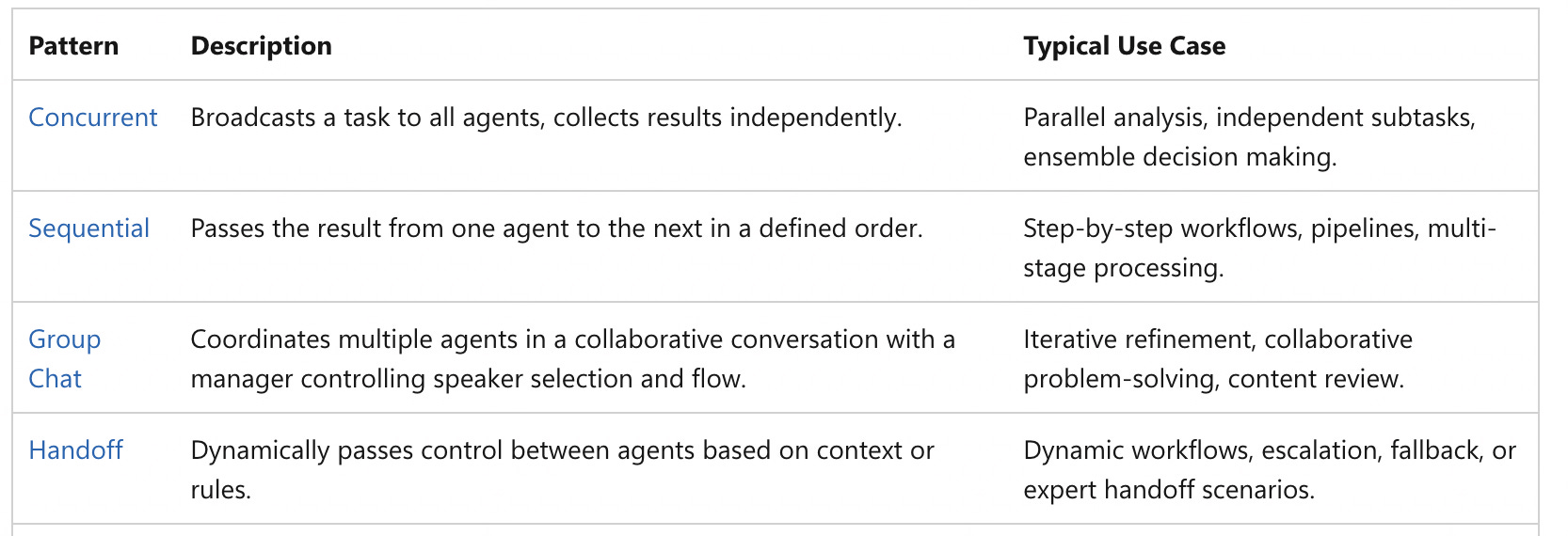
1. Sequential Orchestration
Use Sequential when:
You need a clear, step-by-step audit trail for compliance or risk.
Each step truly depends on the previous result or side effects.
Predictability and safety matter more than raw speed.
You want an easy story for architects, auditors, and ops to understand.
2. Group Chat Orchestration
Use Group Chat when:
The problem needs debate, critique, and perspective-taking, not just execution.
No single agent has enough context or capability to solve it alone.
The best answer is non-obvious and should emerge from dialogue.
You care about idea quality more than strict determinism.
3. Concurrent Orchestration
Use Concurrent when:
Time pressure is high and latency is a hard constraint.
You can break work into independent subtasks, or
You want multiple angles on the same question to compare and fuse.
You can afford the extra parallel calls and infra cost.
4. Handoff Orchestration
Use Handoff when:
The workflow is complex and somewhat unpredictable.
Different stages need deep specialization from different agents or tools.
A rigid, predefined sequence would create bottlenecks.
The Real Secret: It’s Not About the Agents
Here’s what Sarah learned after six months of running these systems: the magic isn’t in having smart agents. It’s in the orchestration.
She’s seen brilliant individual AI models produce garbage results because they weren’t coordinated properly. And she’s seen relatively simple agents accomplish remarkable things because they were orchestrated elegantly.
The best orchestration is invisible. Users don’t see the complex coordination happening behind the scenes. They just see fast, accurate results that feel like magic.
But it’s not magic. It’s architecture.
The Bottom Line
We’re at the beginning of the agentic AI revolution. The companies that will win aren’t those with the most advanced models. They’re the ones who figure out how to orchestrate those models elegantly. And build smart agentic workflows that will replicate business processes.
Because in the end, intelligence without coordination is just noise.
But intelligence with coordination? That’s a symphony.
Want to dive deeper into agentic AI architectures? Follow me on Linkedin for more insights on building AI systems that actually work in the real world.
References:
Orchestration Patterns - https://learn.microsoft.com/en-us/agent-framework/user-guide/workflows/orchestrations/overview
Love this framing. In every AI-heavy product I’ve scaled, the breakthrough never came from “smarter agents”, it came from orchestrating them across data, systems, and teams. Integration, governance, and cross-functional alignment are where enterprise value is unlocked. This captures that perfectly.