
Ep. 1 – Great AI agent systems are built on clean workflows, not clever prompts
𝗕𝗲𝗰𝗼𝗺𝗶𝗻𝗴 𝗮 𝟭𝟬𝘅 𝗔𝗜 𝗲𝗻𝗴𝗶𝗻𝗲𝗲𝗿 𝗺𝗲𝗮𝗻𝘀 𝗺𝗮𝘀𝘁𝗲𝗿𝗶𝗻𝗴 𝘄𝗼𝗿𝗸𝗳𝗹𝗼𝘄 𝗱𝗲𝘀𝗶𝗴𝗻, 𝗻𝗼𝘁 𝗷𝘂𝘀𝘁 𝗽𝗿𝗼𝗺𝗽𝘁 𝗰𝗿𝗮𝗳𝘁𝗶𝗻𝗴.

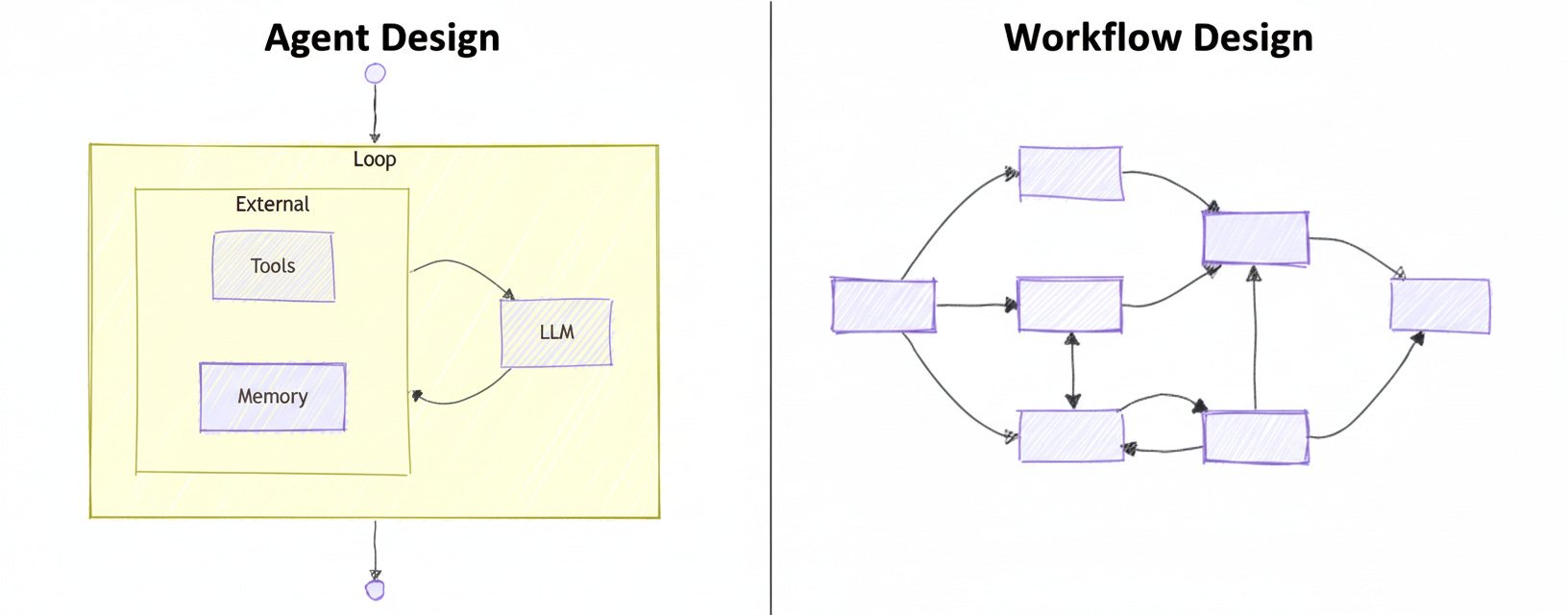
This week I spent some time exploring the Microsoft Agent Framework, and two things really stood out to me:
How easily you can design agents by giving them the tools, memory, access to protocols like A2A, MCP to work in the wild — browsing, retrieving files, researching, and acting.
How cleanly you can create workflows that represent business processes through directed acyclic graphs (DAGs).
Designing an AI agent is not just about plugging in an LLM. It means equipping it with the right model, tools, context, and reasoning to perform a specific role, just like an employee who needs both skills and resources to succeed.
Workflows are where the real enterprise intelligence lives. They represent how agents collaborate to execute a business process, whether in supply chain, finance, or customer service.
The next generation of AI engineers will be those who can:
map business logic to agent workflows with clear inputs, outputs, and handoffs
choose the right model, tools, memory, and retrieval for each agent based on task and risk
think like business-workflow architects who design for scale, cost, and reliability
build with governance in mind, including human review at high-risk stages
instrument everything with observability so issues are detected and fixed fast
We will see specialized agents from enterprises, such as payment, compliance, and marketing ops agents. These agents will interoperate with protocols like A2A.
We will also see packaged workflows that automate slices of business processes like supply chain with human review at high-risk stages.
This is where workflow-as-a-product becomes the next big business opportunity.
If you are building agentic systems, here is my checklist for getting agent design right with Microsoft’s Agent Framework.
1) Start with contracts, not code.
Define the task boundary, inputs, outputs, and tool call budget. Make every tool a first-class citizen with clear preconditions and postconditions. MCP support makes this far easier since tools can be discovered and invoked consistently across services. Microsoft for Developers
2) Pick the right orchestration pattern.
Sequential for handoffs. Concurrent when you want multiple perspectives in parallel. Group chat for collaborative debate with a coordinator. The pattern is the product when failure modes appear in production. Microsoft Learn+1
3) Make humans part of the workflow.
Add approvals where risk is real, not everywhere. Use structured outputs so reviewers scan quickly. Capture feedback signals for future runs. The learn tutorials highlight human-in-the-loop, telemetry, and structured output basics you can adopt today. Microsoft Learn
4) Design for observability from day one.
Trace each message, tool call, and guardrail decision. Track latency, cost, and success criteria per step. If you cannot see it, you cannot ship it.
5) Separate development kit from runtime.
Use the open-source Agent Framework SDK for design and local iteration in Python or .NET. Deploy with Azure AI Foundry Agent Service to get identity, networking, content safety, and scaling baked in. This separation keeps your app portable and your runtime governed. Microsoft Learn+1
6) Treat evaluation like CI.
Write small, repeatable checks for accuracy, policy, and cost. Run them on every change and keep a history. Simple beats perfect if it runs every day.
Why I like Microsoft’s approach: it unifies ideas from Semantic Kernel and AutoGen into a single foundation, with first-class tutorials and migration guidance for teams that already invested in those stacks. That lowers switching costs and speeds up real work. Microsoft Learn+1
If you are getting started, read the Introduction to Microsoft Agent Framework on Microsoft Learn, then build one small workflow end to end and measure it. Microsoft Learn
#agenticai #microsoftagentframework #azureaifoundry #aiarchitecture #mcp #dotnet #python